
Quick version
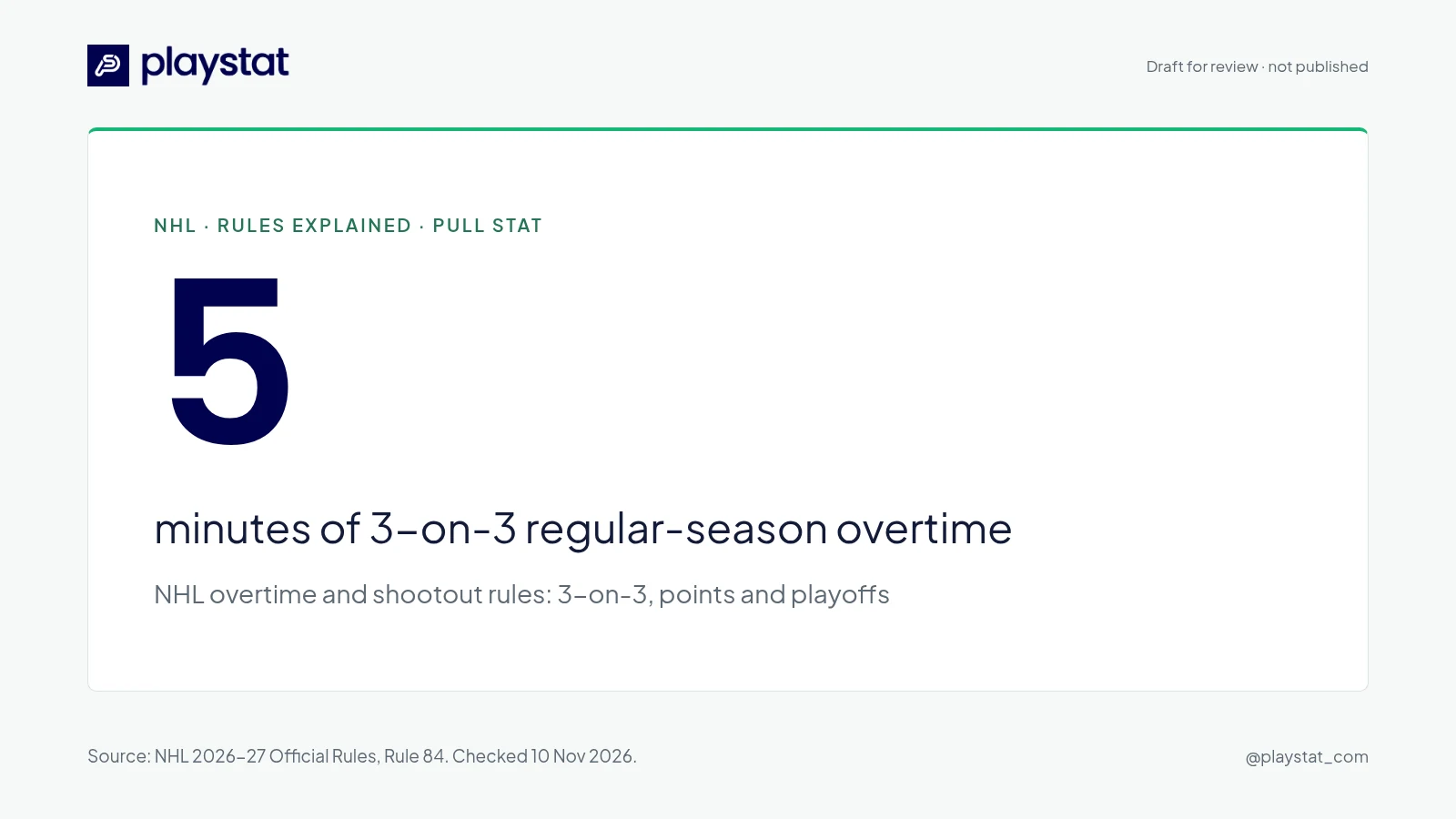
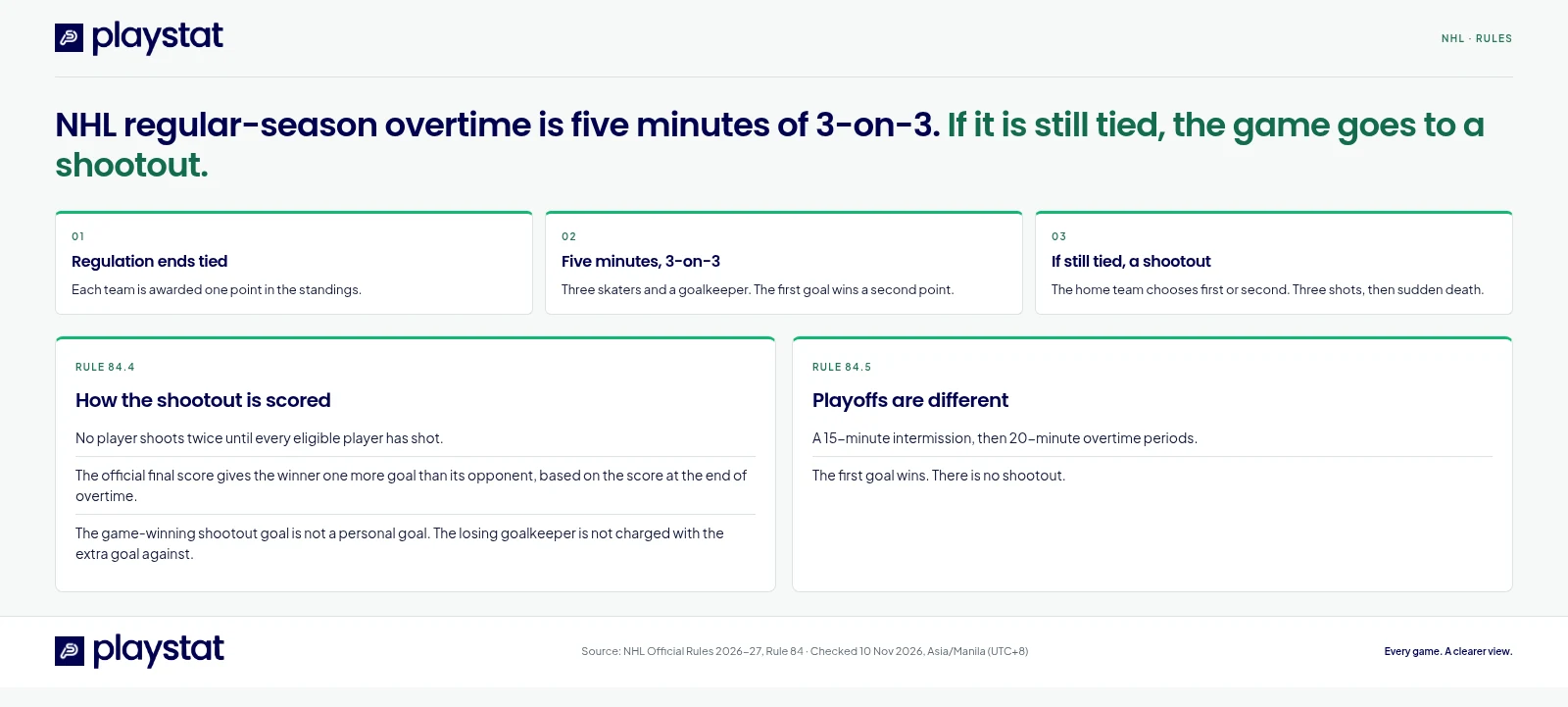
- Rule 84.1: if a regular-season game is tied after three 20-minute periods, each team is awarded one point.[1] The teams then play an overtime of not more than five minutes, 3-on-3 (three skaters and one goalkeeper). The team that scores first wins and is awarded an additional point.
- Rule 84.4: if the game is still tied after that five-minute overtime, there is a shootout.[1] The home team chooses whether to shoot first or second. Each team gets three shots, unless the outcome is decided earlier, then sudden death.
- No player may shoot twice until every eligible player has shot. The official final score gives the winner one more goal than its opponent, based on the score at the end of overtime. The game-winning shootout goal is not credited as a personal goal, and the losing goalkeeper is not charged with the extra goal against.
- Rule 84.5: in the Stanley Cup Playoffs, overtime is 20-minute periods after a 15-minute intermission.[1] The first goal wins. There is no shootout.
Regular-season overtime
Rule 84.1 is the regular-season frame.[1] A tie after three 20-minute periods awards each team one point in the standings. The teams then play an additional overtime of not more than five minutes, with each team at a numerical strength of three skaters and one goalkeeper. The team that scores first is the winner and receives an additional point.
The book also sets the changeover: no intermission time is put on the clock, the entire ice is shoveled, teams do not return to the dressing room, the clock is reset to 5:00, and the teams change ends. For the entire overtime period, they defend the same end as in the second period.
Rule 84.2 covers an extra attacker.[1] A team may pull its goalkeeper in overtime. If it then loses the game while the goalkeeper is removed, it forfeits the automatic point gained from the regulation tie, except when the goalkeeper was removed on a delayed penalty against the other team. Once the goalkeeper has been removed for an extra attacker in regular-season overtime, he must wait for the next stoppage before returning; he cannot change “on the fly.”
The shootout
If the five-minute overtime ends still tied, Rule 84.4 sends the game to a shootout.[1] The home team has the choice of shooting first or second. The teams alternate shots. Each team is given three shots, unless the outcome is determined earlier. After those three shots, if it is still tied, the shootout proceeds in sudden-death format. No player may shoot twice until everyone who is eligible has shot.
The official score is not a running shootout total. Regardless of how many shootout goals are scored, the final score recorded for the game gives the winning team one more goal than its opponent, based on the score at the end of overtime. The losing goalkeeper is not charged with the extra goal against. The player who scores the game-winning goal in the shootout is not credited with a goal in his personal statistics.
Playoffs are a different rule
Rule 84.5 applies in the Stanley Cup Playoffs.[1] When a game is tied after three 20-minute periods, the teams take a 15-minute intermission and resume 20-minute periods, changing ends to start each overtime period. The team that scores the first goal in overtime wins. There is no shootout in the playoffs under this rule.
The money side
No sourced bonus, cap, or payout schedule for overtime or a shootout was located in the official rulebook pages reviewed.
References
Numbered markers in the text, such as [1], link to the source below. All links accessed 10 Nov 2026.
- National Hockey League Official Rules 2026-2027, Rule 84 – Overtime, including 84.1 (regular-season overtime), 84.2 (extra attacker), 84.4 (shootout), and 84.5. NHL Media. media.nhl.com/site/asset/public/ext/2026-27/2026-27Rules.pdf. Accessed 10 Nov 2026.Used for: playoff overtime